MHX Graphite Casting Blank Review
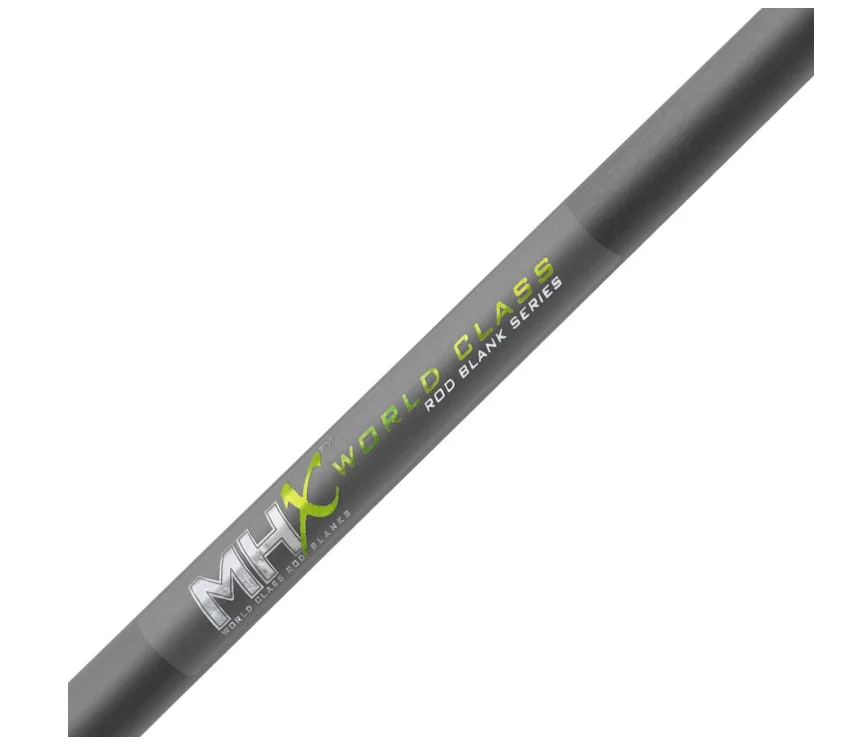
Researched: specs, published reviews and builder reports
Quick verdict: The blank that gets recommended so often it's easy to assume it's overrated. It isn't — the taper consistency between individual blanks is genuinely better than most mid-tier options, which matters more than any spec sheet number once you're actually wrapping guides.
| Product at a Glance | |
|---|---|
| Material | High-modulus graphite |
| Action | Fast, bends primarily in the upper third |
| Best for | Bass, freshwater/inshore casting builds |
| Typical price | $70–130 depending on length/power |
| Piece count | 1 or 2-piece options |
Why blank choice is the decision that matters most
Guides, thread, epoxy, all of that is reversible or fixable if you get it wrong. The blank isn't. Every other component on the rod is built around it, so a mismatched blank means you're compensating for a bad foundation for the entire build, not fixing one mistake.
That's why "which blank" is the question worth spending the most research time on, and also where cheap options cost you the most if the taper is inconsistent unit-to-unit.
What "fast action" actually changes about how the rod fishes
Fast action means the blank flexes mainly in the top third rather than through its full length. In practice: quicker hooksets because there's less blank to load before the hook point moves, more tip sensitivity for feeling light bites, and slightly less casting distance on very light lures compared to a moderate or slow action blank.
For bass and general freshwater casting, fast action is the default most builders reach for — it matches how most modern reaction-bait and worm techniques are fished.
Consistency between units: the part spec sheets don't tell you
Two blanks with identical power/action ratings from different manufacturing runs can still feel meaningfully different in hand. This is the actual differentiator with MHX: builders who've ordered multiple blanks of the same model report less variance than with several budget competitors. That matters if you're building more than one rod on the same blank spec and expect them to feel the same.
Matching power rating to what you actually fish
Power refers to how much force it takes to load the blank, it should roughly track your target lure weight and line class, not just "what feels strong." Going too heavy on power for finesse presentations kills bite detection; going too light for heavier baits risks overloading the blank on the hookset. MHX's spec sheet lists a recommended lure/line range per model — treat that as the starting filter, not the final word, especially if your casting style runs heavier or lighter than average.
How this fits your build budget
Most users report consistent taper feel across multiple blanks of the same model. The specific advantage MHX builders cite most often over budget alternatives. On a typical $250–350 casting build, the blank itself usually represents 30% to 40% of total component spend, sometimes closer to 45% if you're pairing it with a premium guide set. That's the largest single line item in most builds, which is why taper consistency matters more here than almost anywhere else in the component list.
What's good
- Taper and action feel consistent across multiple blanks of the same model: a real problem with several budget alternatives
- Fast action suits the majority of bass and general freshwater casting techniques out of the box
- Manufacturer spec sheet is detailed enough to actually plan a build around, not just marketing copy
What's not
- Priced meaningfully above entry-level blanks — not the cheapest way into your first build
- Fast action isn't ideal if you're building specifically for light lure casting distance
- Limited niche/specialty action options compared to boutique blank makers, this is a workhorse line, not a specialty one
Storing and handling the blank before you build
Graphite blanks are more fragile before they're built than most first-timers expect. The raw blank hasn't yet benefited from the reinforcement guides and wraps add once installed. Store it flat or hanging vertically, never leaning at an angle against a wall where the tip can develop a stress bow over weeks of storage. Keep it out of direct sun and away from a hot garage in summer; UV and heat both degrade the resin binding the graphite fibers over time, even before the rod is finished. When you're marking guide spacing, use a soft pencil or grease pencil rather than a permanent marker with solvent-based ink, since some solvents can micro-etch the blank's clear coat. None of this is complicated, but skipping it is exactly how a $90 blank becomes a $90 mistake before it's even wrapped.
Who it's for — and who should look elsewhere
Good fit if you...
you're building a dedicated bass or general freshwater casting rod, you want predictable results across more than one build, or you've been burned by taper inconsistency on a budget blank before.
Skip it if you...
your target technique needs a slow or moderate action for lighter lure casting distance, or you're doing a single low-stakes practice build where blank consistency across units doesn't matter to you yet.
Questions builders ask
Questions builders ask
What does 'fast action' mean for a beginner?
Can I build a spinning rod on a casting blank?
How do I know what power rating I need?
MHX Graphite Casting Blank — typically $70-150 depending on length and power rating
Check Current Price