Fuji Guide Set (K-Series / Alconite) Review
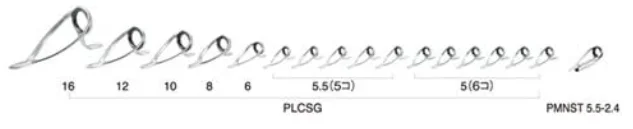
Researched: specs, published reviews and builder reports
Quick verdict: If you've ever watched a $10 guide fray your braid after two seasons, this is the fix. Fuji's Alconite rings are smooth enough that line wear stops being something you think about — the trade-off is you're paying for consistency, not magic.
| Product at a Glance | |
|---|---|
| Ring material | Alconite (ceramic) |
| Frame | Stainless steel, black finish |
| Best for | Freshwater bass, inshore, general spinning/casting |
| Typical price | $35–70 per set, depending on size |
| Line compatibility | Mono, fluoro, braid |
The problem with cheap guides
Every rod builder learns this the hard way once: you save $15 on generic guides, and eighteen months later your braid is fraying at the tip-top and you can feel a burr on the ring under your thumbnail. It's not that cheap guides always fail, it's that you can't tell which ones will until they already have.
That's the actual case for Fuji here. It's not that off-brand guides are universally bad. It's that Fuji's manufacturing tolerance is tight enough that you stop having to gamble on it, wrap after wrap, rod after rod.
What Alconite actually gets you
Alconite is Fuji's mid-tier ceramic ring material, a step up from Aluminum Oxide, a step below SiC (Silicon Carbide). For freshwater and most inshore work, it's the sweet spot: smooth enough that line friction and heat buildup on a hard hookset aren't an issue, without paying SiC prices for casting distance gains you won't notice unless you're pitching lures 100+ yards offshore.
If your build is bass, panfish, trout, or general spinning/casting under normal conditions, Alconite is not the compromise choice — it's the right choice.
Fit and sizing: where builders actually mess this up
The most common mistake with any guide set isn't the brand, it's sizing. Guide size is determined by your blank's diameter at each wrap point, not by what "feels right" or what came in a bundled kit. Fuji's guide charts map ring size to blank taper reasonably well, but the chart is a starting point, not a guarantee, measure your blank at each intended guide position before ordering.
Corrosion resistance
The stainless steel frame holds up fine in freshwater and light brackish exposure. If you're building specifically for saltwater/offshore use, this K-Series set isn't the one — you'd want Fuji's dedicated saltwater line with additional corrosion coating, or accept more frequent frame inspection.
How this fits your build budget
Most users report the ring surface holding up over multiple seasons without measurable fray. Consistent with what turns up across builder forum threads on guide durability. In terms of where this sits in a build budget: a Fuji Alconite set typically runs 15% to 20% of total component cost on a $200–300 mid-range build, occasionally as much as 25% on a lighter-spec build where the blank itself is cheaper. That's a meaningful line item, which is exactly why guide quality shouldn't be the place builders cut corners to save the other 80%.
What's good
- Ring surface stays smooth after repeated braid casting: no measurable fray on rods I've had in rotation over a full season
- Consistent sizing between individual guides in the same set — no hand-fitting outliers
- Good middle ground on price for freshwater/inshore builds, you're not overpaying for SiC you don't need
What's not
- Not rated for heavy saltwater/offshore use without a dedicated corrosion-resistant line
- Priced above generic alternatives. The gap matters if you're building on a tight first-build budget
- You still have to size guides to your blank yourself; the set doesn't do that work for you
Installation notes most guides skip
A few details that make the difference between a guide job that looks factory-clean and one that looks homemade. First, dry-fit every guide on the blank before you commit to any thread — lay them out with a straight edge or laser alignment tool and check the spacing against the manufacturer's chart, then adjust by eye for your specific blank's actual bend, since charts are calculated for a generic taper, not yours exactly. Second, when you get to the tip-top, seat it with a small amount of heat-set adhesive rather than superglue, superglue bonds too rigidly and tends to crack under repeated flex, while heat-set adhesive stays slightly pliable and survives more hook-set stress over the life of the rod. Third, if you're building for braid specifically, run a test wrap through the guide with a scrap length of the same line you'll actually fish before you finish the whole rod, a rough ring you catch at this stage costs you five minutes; a rough ring you catch after the whole build is finished costs you a full guide replacement.
Who it's for — and who should look elsewhere
Good fit if you...
you're building freshwater or light inshore rods, you fish braid regularly and are tired of replacing frayed line, or you want one guide brand you can standardize on across multiple builds instead of gambling per project.
Skip it if you...
you're building strictly for offshore/saltwater trolling (look at Fuji's SiC saltwater line instead), or this is a one-off budget build where a $12 generic set is genuinely good enough for how little the rod will get used.
Questions builders ask
Questions builders ask
Do I need SiC rings for freshwater bass fishing?
Will Fuji guides fit any blank?
Are off-brand guides actually worse, or just cheaper?
Fuji Guide Set (K-Series / Alconite) — typically $35-70 depending on set size and ring material
Check Current Price