Flex Coat Lure & Rod Finish (Two-Ton Epoxy) Review
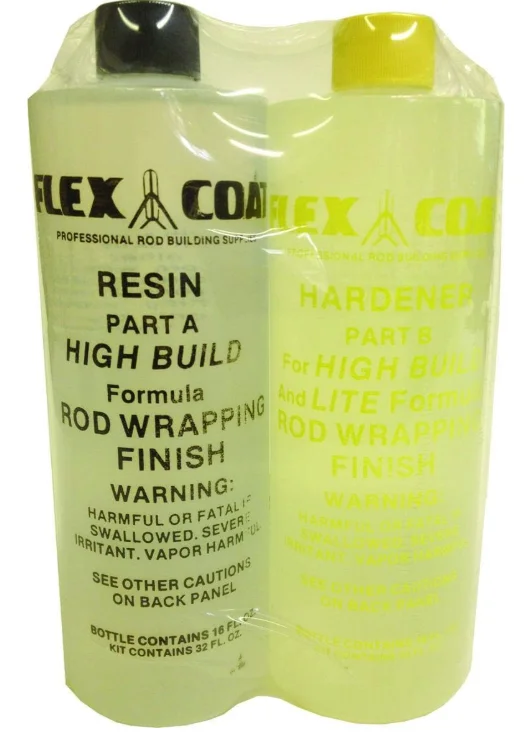
Researched: manufacturer data and builder feedback
Quick verdict: Forgiving enough for a first attempt, consistent enough that experienced builders keep buying it instead of switching. The catch isn't the epoxy — it's that no finish looks good without a rod dryer, and skipping that step is the single most common way builders sabotage their own wrap job.
| Product at a Glance | |
|---|---|
| Type | Two-part epoxy, 1:1 mix ratio |
| Cure time | Workable in hours, full cure ~24h |
| Best for | Thread wrap coating, general finish |
| Typical price | $15–30 depending on kit size |
| Requires | Rod dryer for even cure |
Why finish is where good wraps go to die
You can spend three hours getting a thread wrap perfectly even, then ruin it in the last five minutes with epoxy that sags to one side while it cures. This is the most common way a first build looks amateur even when the actual wrapping technique was solid, and it's almost always a finish problem, not a wrapping problem.
The mixing ratio actually matters
Flex Coat's two-part system is 1:1 by volume, which sounds simple until you're eyeballing small quantities and get it slightly wrong. Off-ratio mixing is the single biggest cause of tacky, soft, or cloudy finishes that never fully cure hard. Use actual measuring syringes or a small scale rather than guessing, the few extra minutes prevent redoing the whole coat.
Why you can't skip the dryer
This is the part that catches new builders off guard: even mixed perfectly, epoxy finish will sag toward the underside of the blank while curing under gravity alone, leaving a lopsided, uneven coat. A basic rod dryer — even a slow-turning motor setup: rotates the blank continuously through the cure window and is what actually produces the glass-smooth, level finish you see in good builds. It's a one-time tool purchase, not an optional accessory.
Cure timeline, don't rush it
Flex Coat becomes workable to the touch within a few hours, but full hardness takes about 24 hours. Fishing a rod before that window is up is the fastest way to dent or scuff a finish that hasn't fully hardened yet, even if it looks done.
Mix ratio and where this fits your build budget
Most users report that off-ratio mixing — not the epoxy itself. Is the root cause of soft or tacky finishes. The system mixes 1:1 by volume: 50% resin, 50% hardener, measured rather than eyeballed. Cost-wise, finish and epoxy typically account for just 5% to 8% of total component spend on a standard build: a small percentage for a step that determines whether the finished rod looks amateur or professional.
What's good
- Self-levels well when mixed correctly, forgiving of minor application unevenness
- Clear cure with minimal yellowing over time compared to some budget epoxy alternatives
- Widely used enough that troubleshooting help (mixing issues, bubbles, cure problems) is easy to find in the builder community
What's not
- Useless without a rod dryer — budget for one if you don't already have it
- 1:1 mixing by volume requires actual measuring tools for consistent results, not eyeballing
- Full cure takes a full day, not a same-day-fishing finish
Common finish problems and what actually causes them
A cloudy or hazy finish almost always traces back to humidity during application. Epoxy curing in a humid garage or basement can trap moisture in the coat, leaving a milky look that never fully clears. If that's a recurring problem for you, apply on a low-humidity day or run a small dehumidifier near the bench for an hour before you start. Bubbles usually come from over-mixing — stirring too vigorously whips air into the epoxy, and while a light pass with a heat gun or lighter after application pops surface bubbles, deep bubbles from aggressive mixing won't come out that way. Runs and drips at the guide feet happen when too much epoxy is applied at the wrap's edge; a thin, even coat that just covers the thread performs and looks better than a thick one, despite the instinct to over-apply for a glossier look.
Who it's for, and who should look elsewhere
Good fit if you...
you're finishing thread wraps on any custom build and already have (or are willing to buy) a basic rod dryer, or you want a finish forgiving enough to not punish small application mistakes on a first build.
Skip it if you...
you don't have a dryer and aren't planning to get one, the finish will look uneven regardless of epoxy quality, or you need same-day cure and can't wait the full 24 hours.
Questions builders ask
Questions builders ask
Do I really need a rod dryer for a good finish?
How long before I can fish a rod after finishing?
Can I use this to glue on the reel seat and grip too?
Can I speed up the cure time?
Flex Coat Lure & Rod Finish (Two-Ton Epoxy): typically $15-30 depending on kit size
Check Current Price