CRB Advanced Hand Wrapper System Review
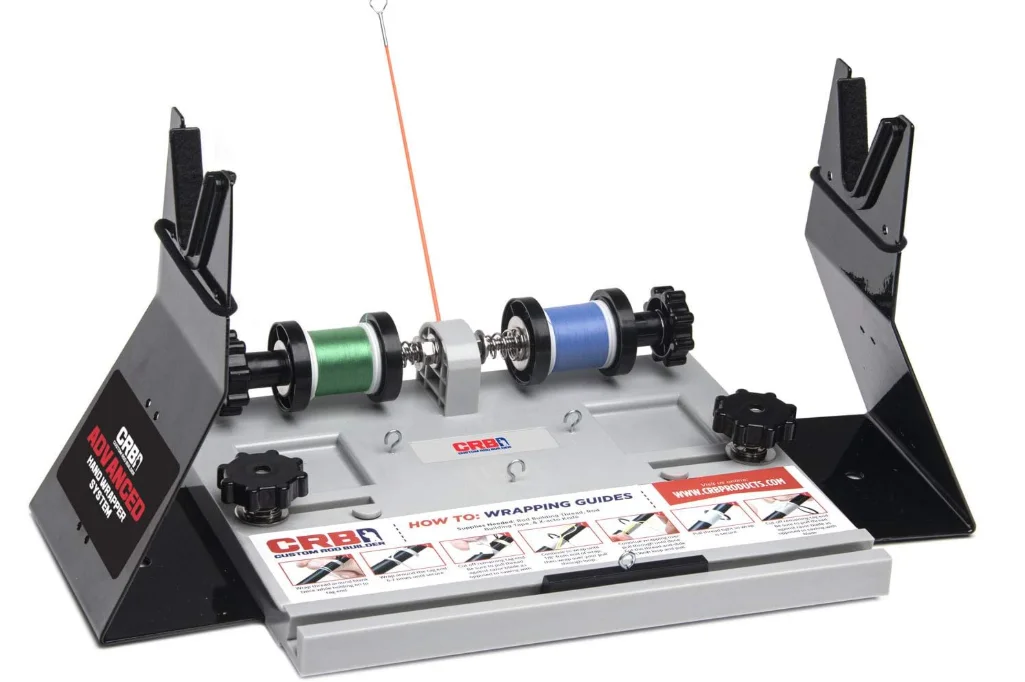
Assessed against specs, published reviews and builder community reports
Quick verdict: The upgrade that makes sense once you've built two or three rods on a DIY thread tensioner and gotten tired of fighting it. Not a beginner purchase — but if you're wrapping regularly, the 2-spool tension system pays for itself in fewer ruined wraps.
| Product at a Glance | |
|---|---|
| Type | Manual hand wrapper with dual thread tensioner |
| Spool capacity | 2 spools, easy color changes for underwraps/overwraps |
| Mount | Wall mount |
| Typical price | $65–75 |
| Best for | Builders past the first-kit stage doing regular wrap work |
What problem this actually solves
If you've built one or two rods on a homemade thread tensioner, a spring clamp, a rigged-up bobbin, whatever got you through your first build — you already know the failure mode: tension that drifts mid-wrap, thread that slips, and wraps that look fine until you look closely. That inconsistency is what a dedicated hand wrapper is built to remove.
Why 2-spool capacity matters more than it sounds like
Most rod wraps use at least two thread colors: a base/underwrap and a decorative overwrap, sometimes trim on top of that. Without a 2-spool setup, every color change means stopping, re-threading, and re-tensioning from scratch, which is exactly when consistency breaks down mid-rod. Being able to alternate between two pre-tensioned spools keeps tension consistent across color changes, which is where a lot of visible wrap inconsistency actually comes from.
Ball-bearing tension vs. spring tension
Spring-loaded tensioners (common on DIY setups and cheaper wrappers) tend to drift as the spool empties — tension at a full spool isn't the same as tension near the end. A ball-bearing, spring-loaded delivery system holds more consistent tension through the full spool, which matters most on longer wraps where a visible tension shift partway through is hard to hide.
Built-in tool storage. A small thing that adds up
Not a headline feature, but worth mentioning: having guides, blades, and small tools within reach on the unit itself instead of scattered across the bench is one of those things that doesn't matter until you're mid-wrap and need a razor blade with epoxy-tacky fingers. It's a workflow improvement, not a performance one.
How this fits your tool budget
Most users report the 2-spool tensioner cutting noticeable time off color-change wraps compared to single-spool or DIY setups. As a tool investment, this typically represents 40% to 50% of what most builders spend on their first dedicated wrapping tool upgrade: meaningfully less than the 100% jump to a motorized power wrapper, while still solving the tension-drift problem that drives most people to upgrade in the first place.
What's good
- 2-spool tensioner genuinely speeds up and cleans up color-change wraps compared to single-spool setups
- Ball-bearing tension holds consistent through a full spool, unlike basic spring tensioners
- Built-in tool storage keeps small tools within reach mid-wrap
What's not
- Overkill for a first build — you won't feel the benefit until you're wrapping regularly
- Manual, not motorized, still requires hand-turning technique, this isn't a power wrapper
- Wall-mount setup needs a dedicated spot in your shop, not as portable as a bench-clamp tensioner
Setting it up on your bench
The wall-mount design means placement matters more than with a portable clamp-style tensioner. Mount it at a height where your hands are roughly level with your elbows while seated, which reduces fatigue on longer wrapping sessions. Leave enough clearance to the sides for the full blank length you typically work with; a common mistake is mounting it too close to a side wall or shelf, which becomes obvious the first time you're wrapping a 7-footer and run out of room to rotate the rod smoothly. Route your two thread spools so the working thread comes off the top of each spool, not the bottom — this small detail affects how evenly tension holds as each spool empties, and it's easy to overlook the first time you set the unit up.
Who it's for, and who should look elsewhere
Good fit if you...
you've completed at least one or two builds already and are frustrated with tension drift or slow color changes on a DIY or basic tensioner setup.
Skip it if you...
this is your first build, a basic kit tensioner or even a simple DIY setup is enough while you're still learning wrap technique itself, or you're looking for a motorized power wrapper rather than a manual one.
Questions builders ask
Do I need a motorized wrapper instead of this?
Will this work with any thread brand?
Is this worth it if I only build 1-2 rods a year?
Can this mount on a portable stand instead of a wall?
CRB Advanced Hand Wrapper System. Typically $72
Check Current Price